
I have observed a particular phenomenon that completely fascinates me as to why it happens. I have seen it, read about it, watched movies about it, heard songs about it, and now write about it. We have a name for it in Jamaica, but I want to know its academic term. I have thought about it so much that it got me thinking that some academic out there must have looked into this. I searched Google Scholar using the keyword ‘resentment’, and generosity automatically came up, so I searched for both terms. It didn’t look like what I was looking for, so I searched Google instead (without the scholar), using the keywords ‘resentment of those who help you’. I found an article entitled Why we sometimes hate the good guy.
This article starts by stating that we—people, communities, and society(ies)—should celebrate the good guys and only punish the bad guys, and it does happen, but that’s not always the case. The good guys are sometimes punished for no other reason than being good. Co-operation or cooperative behaviour is encouraged and rewarded for the most part. Still, it is penalised in society (home, families, workplace, church, and other social groups) and accounts for 20% of all punishment. This phenomenon has been explored in anthropology, social psychology and experimental economics. But what exactly is it, and why do we tend to ‘tear down’ the good guys?
I have had my theory as to why people who help others (good guys), who I shall call ‘do-gooders’ in this piece of writing, are resented by those they help or those who witness them doing good. I hypothesise that doing good for others elicits gratitude in the beneficiary, or at least it should. However, some people don’t like feeling indebted to another. So they sometimes create narratives that put the do-gooder in a negative light to justify resenting them and, in their minds, lessen the debt they owe. Being on the receiving end of too much kindness, especially from the same individual do-gooder, sometimes makes the beneficiaries feel vulnerable. They feel like they’re at the mercy of the do-gooder and have to restore balance to the giver-receiver dichotomy.
But what does the scientific community have to say about this?

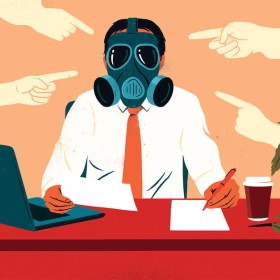
Social psychologists have coined the term ‘do-gooder derogation’ to describe the phenomenon. Do-gooder derogation is “the putting down of morally motivated others” (Minson & Benoit, 2012). The authors suggest that the derogation or put-down of these individuals is done because of feelings of being morally judged by the do-gooder. Do-gooders are punished—“criticised or ridiculed”—for their good deeds. Helping other people makes some feel judged, hence resentment towards people who help them. Vegans came up a lot in some of the research, noting how meat lovers resent vegans because they are perceived to be judging meat lovers. I can understand why meat lovers feel judged by vegans—that’s because vegans are judging meat lovers. But I digress.
Vegans are not the do-gooders I’m talking about here, though. I refer to the family member, friend, co-worker or community volunteer who is very kind and is always ready to help out but tends to always be on the receiving end of criticism and backbiting. Why does this happen? Do others think that they have ulterior motives and are only doing good to get recognition from it? That may be the case in some instances, but if you benefit from the kindness or good deed, why search for a reason to hate the helper? I suppose that some have had prior negative experiences with seemingly good and kind people who turned out to be utter devils. But this is not always the case. Some truly genuine people have felt the ire of those they try to help for no good reason.
Similar to do-gooder derogation is ‘antisocial punishment’, which is “the sanctioning [punishment] of people who behave prosocially” (Herrmann et al., 2008). Prosocial behaviours are, as the term suggests, behaviours that benefit others or society as a whole, such as helping others, cooperating with others and volunteering (Brief & Motowidlo (1986). Again, why would anyone want to punish someone who behaves or acts in ways that benefit the overall well-being of the group or society? A study by Pleasant & Barclay (2018) found that antisocial punishment is employed as a social strategy by low cooperators to avoid looking bad when high cooperators escalate cooperation. Here, the do-gooder is sanctioned or punished by their social group. This punishment can, as mentioned before, come in the form of gossip and backbiting, sabotaging, and it can even devolve where do-gooders are plotted against—harmed or even killed.

Both do-gooder derogation and antisocial punishment are intended to prevent do-gooders, who are seen as competitors, from gaining a reputational advantage, which those they help, or those who observe their kindness, interpret as ‘making them look bad’ (Pleasant and Barclay). In Jamaica, this can be summed up in one term, ‘bad-mind’. Now, bad-mind in the Jamaican context is more encapsulating than feelings of resentment towards, or criticisms of, a do-gooder, or ostracising those who demonstrate behaviours that benefit the collective. It is an all-encompassing term that describes negative experiences in familial, interpersonal, community, or professional relationships. It doesn’t only affect do-gooders but anyone seeming to succeed in life (or at least trying to). Bad-mind is synonymous with several negative phenomena observed in many cultures, such as the ‘evil eye’, ‘red eye’, jealousy, envy and covetousness. Here, I want to focus on bad-mind towards do-gooders.
Let’s go back a bit. Some researchers have stated that do-gooders are seen as ‘competitors’ to those around them—those they help or witness their good deeds. Why would anyone compete with someone they’re trying to help? And who exactly could a do-gooder be competing with just doing their job, doing what they love, or helping out when needed? This perceived competition is what drives the resentment towards do-gooders. Someone performing good deeds is also perceived as trying to improve their social status, which can be seen as a threat to those around them, who also feel left behind if this person ‘moves up’ in society. But what’s wrong with taking steps to move up in life? Everyone wants to succeed. And therein lies the dilemma: because everyone is trying to succeed, some will naturally view others’ success as competition or a threat.
This is the definition of bad-mind.
But these occurrences are so pervasive that they could almost be considered normal. But are they? While antisocial punishment is mainly used against low cooperators in some cultures, it is observed to be used against both high cooperators and low cooperators in other cultures (Herrmann et al., 2008). In the latter scenario, there are disincentives to giving or doing ‘too much’, similar to doing too little. These researchers also found that weak norms concerning civic duty, civic pride, trust and cooperation, and a weak rule of law in a country are significant predictors of antisocial punishment or bad-mind. In other words, bad-mind thrives in a lawless country where positive cultural and social norms have broken down.

Poverty, inequality, and competition for scarce resources thrive in a lawless country. Could the latter be why a lawless country is such a hotbed for antisocial punishment? In a poor and lawless country, citizens cannot meet their basic needs, so much so that they must compete, even where competition is not required. A neighbour upgrading their modest board house to a concrete structure in a space filled with board houses may be perceived as trying to improve their status, succeeding more than the other neighbours, and making the others look bad.
So we’re seeing that certain socio-economic conditions breed these kinds of antisocial behaviours in people. It’s more than just the ‘green-eyed monster’, envy, antisocial punishment or do-gooder derogation. It’s living in desperate circumstances with other desperate people who are all trying to claw their way out. But instead of working as a collective and recognising that good deeds are beneficial to the collective, they see each other as competition. Do-gooders are perceived to be trying to outdo others, but at the end of the day, they are all still stuck in misery with their perceived competitors.
Bob Marley
They keep us hungry
And when you gonna get some food
Your brother got to be your enemy
Ambush in the night
All guns aiming at me
Ambush in the night
They opened fire on me
Bad-mind is largely a symptom of poverty, inequality and desperation. This is not to say that there aren’t those who have an abundance of resources who still bad-mind others—even those who have less than them. But if individuals feel locked in a desperate situation with scarce resources, it is inevitable that competition will ensue. This is by design. This has been happening for too long for those with power to not deduce the root cause. The King of Reggae, Bob Marley, described this perfectly in his song, Ambush in the Night. It’s like crabs in a barrel—all trying to get out at the same time. When one crab looks to be at the top and on the verge of escaping its prison, the other crabs pull it back down. Instead of cooperating and standing on the shoulders of each other to climb to the top, then reaching back down to lend a helping hand, everybody gets pulled down and stays forever in the mire.
Can bad-mind be cured from the world, or even our community/country? Maybe not entirely, and maybe not the type of bad-mind by individuals who have a lot and are never satisfied, but providing opportunities and resources for disenfranchised people to succeed could go a long way in them not competing with other disenfranchised people. Addressing the social welfare of citizens can take them out of survival mode and promote trust and group cohesion.
What do you think?
Written by L.M. McBean
LariMac ©️ 2023




 LariMac